Beat What’s Pestering Your Plants
At one time or another, we’ve all battled pests in our yards and gardens, from weeds and insects to plant diseases.
Were the methods you used successful? Did they do the job safely without endangering you, your family, your pets or the environment? If not, it’s time to use a new set of tools from your pest management toolbox. In Nevada, many plant problems are caused by things we do that stress plants, such as improper watering, pruning, fertilizing or mowing, or putting the wrong plant in the wrong place.
Pests usually take advantage of these stressed plants. Focus on keeping plants healthy to prevent plant pests in the first place.
Use these tools to beat plant problems:
- Build up your soil. Good soil helps keep plants healthy and pestresistant.
- Plant healthy, naturally pestresistant plants that do well in your area.
- Choose a mix of plants and plant types for your garden.
- Leave room around plants for good air circulation.
More tools to beat plant problems:
- Water the right amount for each plant.
- Keep beds and plants free from plant debris and weeds.
- Mulch to keep moisture in the ground and reduce weed problems.
- Keep plants healthy with properly timed pruning and fertilizing.
- Pick insects off by hand.
- Knock off pests with a strong jet of water from your hose.
- Pull or hoe weeds.
- Place barriers, such as nets or row covers, around or over plants toprotect them from pests.
- Use traps to capture insects, rodents and other pests.
- Apply repellents to discourage deer and other critters.
- Increase the number of good bugs in your yard–the beneficial insects that eat or prey on plant pests.
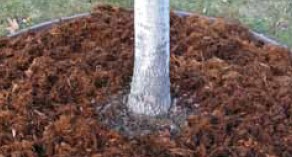
Keep mulch several inches from the tree trunk to help keep pests away. W. Hanson Mazet, UNCE.
Tips to protect your plants from pests:
- Buy plants that will do well in your yard. Don’t fight Mother Nature! Learn the best growing conditions for your plants.
- Get help figuring out your plant problem. Bring samples to a University of Nevada Cooperative Extension office, or email good-quality photos for help figuring out the problem.
- Don’t get pests in the first place. Stop pests from becoming a problem. Use clean fill dirt or topsoil, plant certified weedfree seed and buy high quality, pest-free plants.
- Give pests the right one-two punch. Use more than one tactic to manage your pests.
- Accept some pests. The goal is to keep pest populations from getting too large. Focus on knocking back pests rather than getting rid of every one of them.
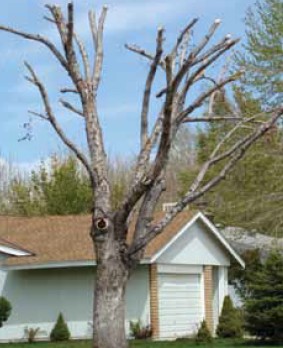
Never top a tree. Improper pruning stresses a plant and invites diseases, insect pests and other problems. W. Hanson Mazet, UNCE.
Chemical control is the tool of last resort:
- Do some homework before you pick a product.
- Get advice from a trained professional.
- Use the least toxic method for the specific insect or pest.
- Read, understand and follow the label directions exactly.
- Apply chemicals when the pest is at a vulnerable stage of growth.
- Always wear the protective safety equipment listed on the product label.
- Never spray when it’s windy or raining.
- Keep children, pets, toys and bowls out of the area while you spray and for as long afterward as the lable requires.
Using more than one tool is part of Integrated Pest Management (IPM).
University of Nevada, Reno Extension
The above information is based on a printed factsheet (Beat Whats Pestering Your Plant) originally published in 2012.
Published by:
Hefner, M.; Donaldson, S.; Kratsch, H.; Skelly, J., 2012, Beat What’s Pestering Your Plants, Extension, University of Nevada, Reno
An EEO/AA Institution. Copyright © 2026, University of Nevada Cooperative Extension.
A partnership of Nevada counties; University of Nevada, Reno; and the U.S. Department of Agriculture