Firescaping Principles
Understanding the principles of defensible space and firescaping can help you to determine where to place plants on your property. The plants you choose should have fire-resistant characteristics, including:
- higher moisture content
- higher mineral content (saponin, pectin, latex)
- no, or low, volatile oil/resin content
- leaves are not waxy
- smaller overall plant size
The plants featured in this guide have these characteristics, along with lower water needs once established. Many also have blooms that attract pollinators.
The fire-smart landscaping principles that follow provide general guidelines, with emphasis on “Right Plant, Right Place” and regular maintenance. Choose plants suited to their location, and keep them healthy, “green” and “clean” to reduce ignition risk. With few exceptions (e.g., junipers), poor plant placement—not plant species—is the primary concern.
1. Zone 0 (0–5 feet around structures): Remove all flammable materials. Use hardscaping (pavers, rock mulch) or small plants in moveable containers (making sure to relocate these during red flag warning days or evacuations.)
2. Plant selection and maintenance: Consider the mature size and ongoing maintenance needs of plants. These are perhaps the most important, and most overlooked, principles when making plant choices. Choose plants that heightmatch long-term goals (e.g., low maintenance, low flammability, low water use). Prune or trim regularly to remove dead or unhealthy material. Routinely remove accumulated leaves and other debris.
3. Break up fuels: Use hardscaping, such as dry riverbeds, gravel paths or pavers, to create visual interest and interrupt continuous vegetation.
4. Lawns: Keep turf well-watered and mowed to a height of 3–4 inches. Avoid removing more than one-third of blade height in a single mowing. This can stress turfgrass and lead to dry patches.
5. Create plant groupings: Group ignition-resistant plants into islands or planting beds surrounded by nonflammable material, such as hardscaping or well-watered and properly maintained turfgrass.
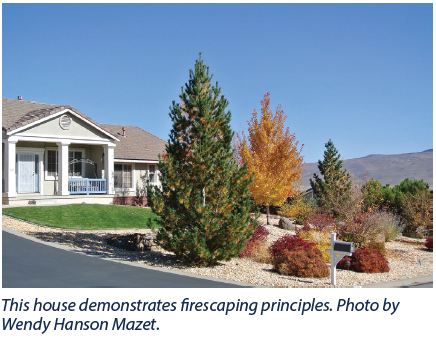
6. Mulch: If using wood or other organic mulches, do not put these in Zone 0. Elsewhere, limit their use to planting beds and plant islands separated by non-flammable materials where possible.
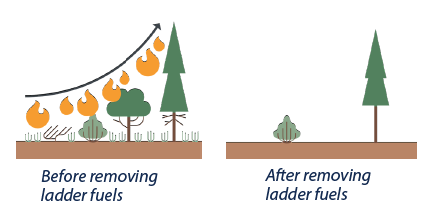
7. Remove ladder fuels: Ladder fuels refer to plants located underneath trees or shrubs that can act as a ladder for flames, allowing fire to spread vertically into tree and shrub canopies. Crown fires are dangerous because they are more difficult to control and have the potential to spread embers far ahead of the fire front.
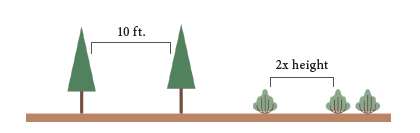
8. Spacing: Provide adequate spacing between plants, and between plants and structures. Plant spacing depends on the type of plant (more flammable plants, or larger plants, require greater spacing), and the topography (plants placed downhill from a structure on a slope require more spacing than those located on flat ground around a structure). In general, plants should be spaced two to three times the height of the mature plant size or plant grouping. Once trees are full grown, their canopies should be 10 feet away from other tree canopies and structures at mature size. When creating defensible space in Zone 1 (5–30 feet from a structure), especially in areas where homes are close together, you’ll likely need to coordinate defensible space actions with neighbors to reduce wildfire risk.
Defensible Space Zones
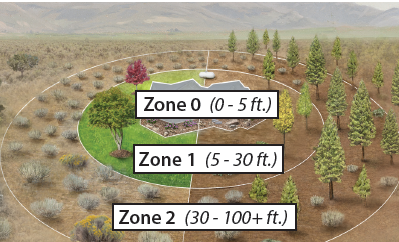
Zone 0: Ember-Resistant Zone
Goal: reduce the vulnerability of the home to embers by creating a zone of ember-resistant materials around the home. Ensure this zone is free of any woodpiles, wood mulch or flammable vegetation.
Zone 1: Lean, Clean and Green Zone
Goal: reduce the risk of fire spreading from surrounding vegetation to the home. Keep this zone “lean” (only a small amount of vegetation present and grouped in discontinuous islands), “clean” (vegetative debris and dead materials routinely removed), and “green” (vegetation kept green and well irrigated during dry months).
Zone 2: Reduced Fuel Zone
Goal: reduce fire spread and restrict fire movement into the crowns of trees or shrubs. Remove dead plant material and low-hanging branches and/or other ladder fuels.
Defensible Space Guide