Everybody wants a lush, green and healthy lawn.
After all, the backyard is where many of us spend quality time with family and friends. A healthy lawn is better able to resist weeds, insects and other stresses. Follow these lawn care practices to improve the look and health of your lawn.
Mow high.
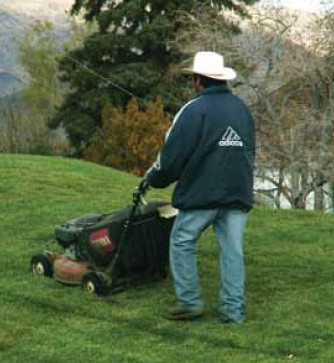
If you were to use only one lawn care practice, this would be the one to remember because it provides multiple benefits to your lawn. Mow your lawn to a height of 3 inches or greater, or at your mower’s highest setting. This makes your lawn better able to handle heat and drought. It also reduces weed and pest problems. The higher a lawn is mowed, the deeper the grass roots grow in the soil. This means that your lawn’s roots can take up water from deeper in the soil. Deep roots also make the grass stronger and more resistant to insects and other pests. The taller grass blades shade the tender growing points, protecting them from intense heat and light. They also shade the soil, reducing sprouting of weed seeds.
Mow regularly.
Mow often enough that you are removing no more than one-third of the grass blade at one time. This means you will mow more often when grass is actively growing in spring and fall, and less often in summer when high temperatures slow growth. Waiting too long between mowing times stresses your lawn by exposing it suddenly to excess light and heat when you mow it. And remember to keep your mower blades sharp to provide a clean cut and prevent tearing of the grass blades. Sharpen your mower blades at least once a year.
Recycle grass clippings back to your lawn.
Leaving grass clippings on your lawn does not cause excess thatch. Thatch consists of dead roots and stems of grass, not the clippings. If you are mowing your lawn properly, you will be able to recycle the clippings back to your lawn, where they add nutrients and organic matter. Lawn clippings contain up to 5 percent nitrogen, the nutrient that keeps lawns green and vigorous. Returning your clippings back to the lawn reduces the amount of fertilizer needed to keep your lawn green.
Water early in the day
Or in the evening, when temperatures are lower and the wind is calm.
Make sure your sprinkler system is applying water evenly to your lawn. You can test this by placing straight-sided soup cans strategically within the lawn area and running your irrigation system for a cycle. Use a ruler to measure the depth of water in each can when the cycle is complete. Each can should contain about the same depth of water. If they don’t, you may have to adjust or replace sprinkler heads to supply the same amount of water everywhere.
Fertilize no more than three time a year.
The cool-season turf grasses used in northern Nevada stop growing when temperatures are high. Don’t fertilize in the heat of summer! Wait until September or October for the last fertilization of the season to provide quick green-up in spring.
Core aerate your lawn once a year.
Core aeration relieves soil compaction and reduces thatch that may have developed in your lawn. Thatch layers deeper than 2 inches can prevent irrigation water from soaking down to the grass roots, and your lawn may turn brown. Compacted soil results from regular use and foot traffic. It prevents air and water from getting to the roots. Avoid using solid metal tines when you aerate as these will contribute to soil compaction. After aerating, leave the soil cores on your lawn where they fall apart and filter back into the soil. This is also a good time to add a thin layer of compost, no more than one-quarter inch, which improves your soil and adds nutrients.
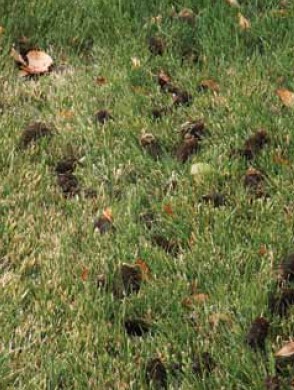
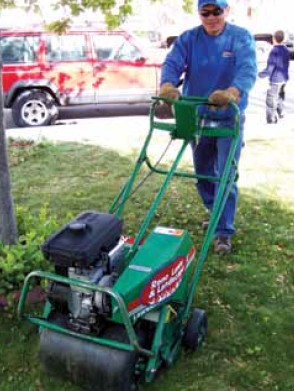
Hollow tine core aeration relieves compaction and thatch from your lawn. The soil cores left behind can be raked to help move the soil back into your lawn. Hollow tines, 3 to 4 inches in length, are attached to a drum and rolled across the lawn. Photos by Wendy Hanson Mazet.
Tips for a Green Lawn
- Mow high (3 inches) and regularly. Mowing high encourages deep roots and helps shade out weeds.
- Leave grass clippings on the lawn to return nutrients to the soil.
- Check your irrigation system often for leaks, breaks in the line and broken sprinkler heads.
- Adjust your watering schedule seasonally. See www.washoeet.dri.edu for watering amounts.
- Core aerate in early fall while grass is still actively growing. This helps reduce compaction and thatch.
- If you only fertilize once a year, do it in the fall after your last mowing of the year.
- Sharpen mower blades at least once a year to avoid ragged brown edges on grass blades.
University of Nevada, Reno Extension
The above information is based on a printed factsheet (Keep Your Lawn Green) originally published in 2012.