Introduction
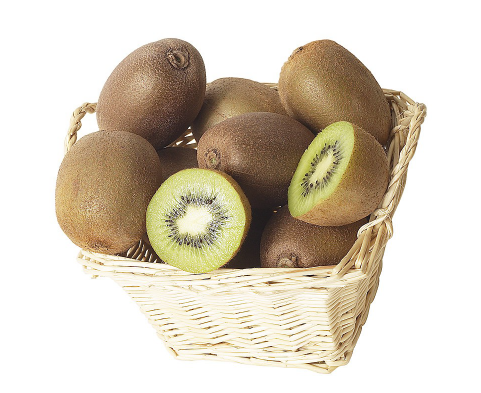
The kiwi is a dynamo of nutrition. Ounce for ounce, a kiwi has more vitamin C than oranges, strawberries or grapefruit. Two large kiwi supply more potassium than a medium banana and almost as much fiber as a cup of bran flakes. All this nutrition for only 45 calories per kiwi.

Can Kiwi Be Ripened?
You bet! If they are still firm when purchased, just place them in a paper bag. Check them daily and they’ll be ready to eat when they begin to feel soft.
If you want to hurry up the ripening process, add a few apples or bananas to the bag. These fruits give off ethylene gas which hastens ripening.
To keep ripe kiwi fresh for several days, place them in the refrigerator in a sealed plastic bag.
Break “fast” With Kiwi
For breakfast, try adding kiwi to cereals or slicing on vanilla low-fat yogurt.
Scoop It Up
Cut the fruit in half and scoop out the flesh with a spoon. The sweet and tart flavors mix well with other fruits, garden greens, and chicken dishes.
Did You Know?
- The fruit was named by New Zealanders after the brown, fuzzy and flightless creature it resembles, the Kiwi bird.
- First brought to the United States in 1962, it took nearly 20 years for kiwi to become a popular fruit.
- Grown in both California and New Zealand, kiwi is harvested by people wearing white gloves to protect the fruit and prevent fingernail cuts in its delicate skin.
- The entire kiwi can be eaten--skin and all. Simply wash thoroughly, trim the ends and enjoy.
Wilson, M.
2011,
The Unbelievable Kiwi,
Extension | University of Nevada, Reno, FS-11-23
Associated Programs
All 4 Kids Program
Extension's All 4 Kids Program and its annual Healthy Kids Festival use activities, music, dance and food to teach kids and their families in Clark and Lincoln Counties nutrition, physical activity and self-acceptance.
The Unbelievable Kiwi
Introduction
The kiwi is a dynamo of nutrition. Ounce for ounce, a kiwi has more vitamin C than oranges, strawberries or grapefruit. Two large kiwi supply more potassium than a medium banana and almost as much fiber as a cup of bran flakes. All this nutrition for only 45 calories per kiwi.
Can Kiwi Be Ripened?
You bet! If they are still firm when purchased, just place them in a paper bag. Check them daily and they’ll be ready to eat when they begin to feel soft.
If you want to hurry up the ripening process, add a few apples or bananas to the bag. These fruits give off ethylene gas which hastens ripening.
To keep ripe kiwi fresh for several days, place them in the refrigerator in a sealed plastic bag.
Break “fast” With Kiwi
For breakfast, try adding kiwi to cereals or slicing on vanilla low-fat yogurt.
Scoop It Up
Cut the fruit in half and scoop out the flesh with a spoon. The sweet and tart flavors mix well with other fruits, garden greens, and chicken dishes.
Did You Know?
- The fruit was named by New Zealanders after the brown, fuzzy and flightless creature it resembles, the Kiwi bird.
- First brought to the United States in 1962, it took nearly 20 years for kiwi to become a popular fruit.
- Grown in both California and New Zealand, kiwi is harvested by people wearing white gloves to protect the fruit and prevent fingernail cuts in its delicate skin.
- The entire kiwi can be eaten--skin and all. Simply wash thoroughly, trim the ends and enjoy.
Published by:
Wilson, M., 2011, The Unbelievable Kiwi, Extension | University of Nevada, Reno, FS-11-23
An EEO/AA Institution. Copyright © 2026, University of Nevada Cooperative Extension.
A partnership of Nevada counties; University of Nevada, Reno; and the U.S. Department of Agriculture