Once again, the unpredictable weather in Reno kept gardeners guessing on when to plant the tomatoes. But presumably the passage of Memorial Day has signaled stability, and most of 2026’s tomato crop is in the ground or soon headed there.
From now until August, the focus is on production practices, pests, and potential problems (okay, I got carried away with the alliteration there). As the old-timers say, the best fertilizer is the footsteps of the farmer, so I hope you can enjoy “walking your garden” for at least a few minutes each day, observing what’s happening there so you can take action as needed. Notice pollinator activity, unidentified flying objects (insects?), a “weed” (especially one you didn’t notice until ACK!) Or, maybe it’s a whiff of something fragrant, a glimpse of a thriving plant that seemed lackluster just days ago, or the first appearance of fruit on your tomato plant.
Watch the Weather
Pay attention to the weather news, whether on TV, radio, or online, but keep it local. It matters not what’s happening in Florida, Kansas, Las Vegas, or Sacramento. What’s in store for your garden is all that’s important. Temperatures, high as well as low, matter. High winds matter. Rain matters, and that’s a tough thing to monitor closely in the Washoe Valley, considering that your neighbor’s garden may get a nice little drink while yours stays thirsty. Get a rain gauge and check it. We have a lot of microclimates in our area, including the ones in your own garden space.
Watering the Tomatoes
Newly transplanted tomatoes need a little more frequent watering, but as their roots develop and plants grow taller, aim for 1 to 2 inches a week, taking any natural rain into account. One inch of water will wet a sandy soil to a depth of 10 inches, clay soil 6 inches deep. Check moisture depth with a trowel just outside of the plant root zone and adjust your watering schedule accordingly.
Tomatoes are in a small family of plants that benefit from deep planting and deep watering. Tomatoes that are encouraged to grow deeper roots will ultimately be more successful. It’s fine to cut back the irrigation a bit on mature plants, but consistently moist soil is important to avoid problems like blossom-end rot. An inch or two of mulch can help maintain soil moisture in the root zone even if the top soil layer is allowed to dry out between watering.
For best production, space your plants about 24 inches apart on all sides. Be sure to provide support for indeterminate vines by staking, caging, or trellising. Use a flexible tie to support vines as they grow.
To Feed or Not to Feed
“Native” soil here is typically nutrient-poor and alkaline, so the general rule is to enrich it every year with organic material, like compost, leaf mold, and well-aged manure. And yes, it’s good to give your new transplants a head start by adding fertilizer. A balanced fertilizer, like 10-10-10, which has equal amounts of nitrogen, potassium, and phosphorus, is fine. A touch more nitrogen is also fine (tomatoes tend to be pretty leafy), but don’t overdo it or you risk growing bountiful foliage at the expense of fruit.
Experts offer differing advice on side-dressing tomatoes (adding additional nutrients as the season progresses). Some recommend a high-nitrogen supplement after the tomatoes have been in the ground for a month or two. But proceed with caution, and be sure you know what sort of climate that expert is growing tomatoes in. Northern Nevada’s growing season is short, especially for the big, juicy slicing tomato varieties that many gardeners crave. At some point the plant has to stop growing and get busy ripening tomatoes.
Pests and Problems
Aphids Early in the season, your tomatoes may be afflicted with aphids, small soft-bodied insects that suck juices from tender, early growth. They cluster on emerging stems and leaves. Carefully inspect emerging growth, including the undersides of leaves. You can gently brush them off by hand, or knock them off plants with a forceful spray of water. A healthy supply of lacewings and lady beetles is your best defense, though, so avoid chemical interventions if you can, to spare the beneficials.
Earwigs These are a potential pest for newly transplanted plants of many kinds, including tomatoes. If you find a plant severed at the base of a stem, dig gently around and look for a C-shaped grub. Protect new seedlings by placing a “collar” around the plant stem, an inch or two deep and extending above the soil. You can use tuna cans or aluminum beverage cans with tops and bottoms removed, or cardboard tubes cut from paper towel rolls.
In the past, I’ve had problems with earwigs chewing on young seedlings (they hide out in moist places under pots on the patio or in damp mulch and come out at night to munch.) Once plants are established, they are not much of a problem, and earwigs do useful work in the garden by cleaning up dead and dying plants. But as pests, they are easy to trap with a shallow container, like a tuna can, filled with an inch of vegetable oil and a dash of soy sauce. In the morning, empty the captured earwigs into a bucket of soapy water to do them in.
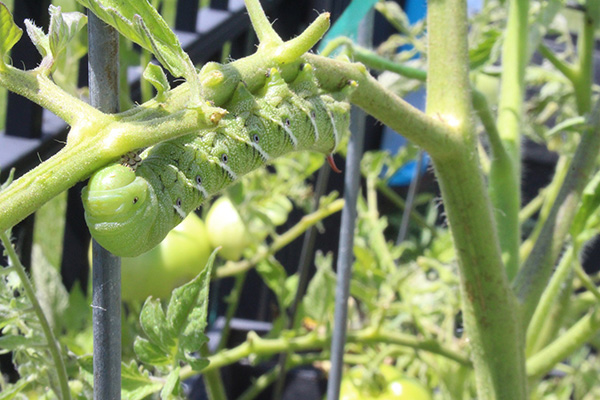 Tomato hornworms can blend in with foliage and reach up five inches in length.
Monitor your tomato plants daily and check under the leaves for eggs.
Photo credit Sheri Elena Quinn. 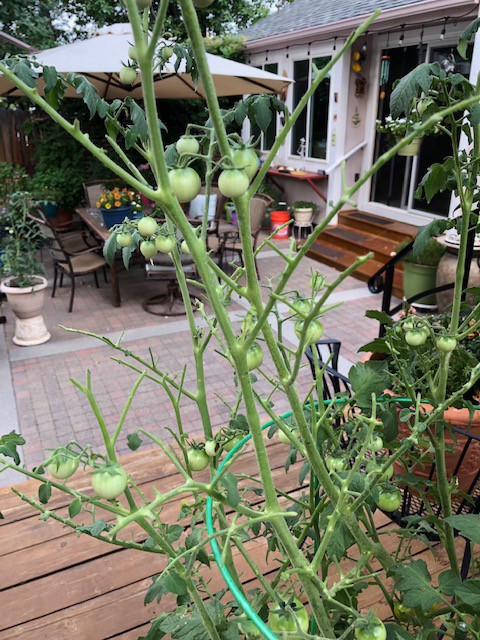 Hornworms can defoliate a plant in a day.
Photo credit Sheri Elena Quinn.
Hornworms The tomato hornworm and its cousin, the tobacco hornworm, are frequent pests in Northern Nevada gardens. These large caterpillars are the larvae of nocturnal moths, commonly called sphinx or hawk moths. While the moths are handsome and often much admired by those up late enough to see them, their offspring are homely and voracious. A few hornworms can defoliate a tomato plant in a few days. Their size makes them relatively easy to spot on your daily walk, though, and they are easy to pick off and dispose of. Or feed to your chickens if you have some. A side note: The hummingbird moth, or white-lined sphinx moth, that delights many gardeners as it flits about sipping nectar from spring blooms, is not the mother of the tomato hornworm. It flies in the daytime, not at night, and its larvae prefer plants other than tomatoes. Its caterpillars are usually yellowish, not green, and it has horizontal dark stripes, not the white stripes of tomato hornworms.
Common Non-Pest Problems
Tomatoes are thin-skinned and vulnerable to some disorders caused by environmental stress factors rather than insect, fungus, virus or other biological vectors.
Blossom Drop Perhaps the most disheartening physiological malady is blossom drop, which prevents the tomato from setting fruit at all. A seemingly robust tomato plant may be loaded with yellow blossoms, but they dry up and fall from the plant without setting fruit. This is often caused by a confluence of events, including high temperature, humidity, sunlight intensity, and scarcity of pollinators. Daytime temperatures of 90 degrees will slow fruit set. Temperatures over 94 degrees will stop it altogether, as will nighttime temperatures over 75 degrees. High temperatures may also discourage pollinators. Tomatoes have so-called “perfect” flowers, with male and female parts on the same blossom, which means they can pollinate themselves with an assist from the wind. But on a hot summer day with not even a refreshing breeze, you may need to give your tomato plant a good shaking to stir things up.
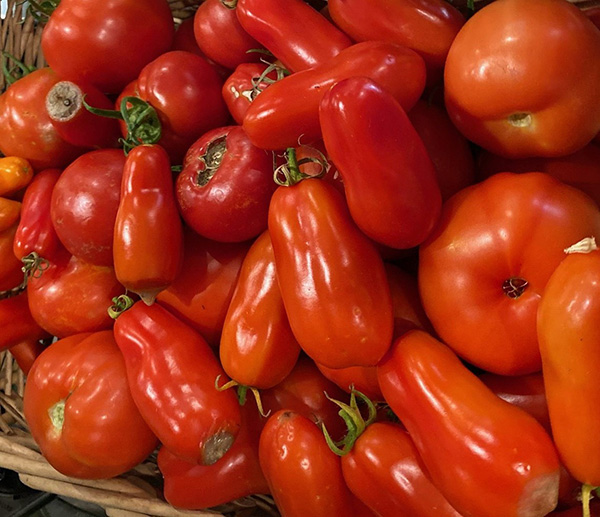
Blossom end rot has left the tips of some of these plum tomatoes discolored or scabby.
The rest of the ripe tomato is still edible, however.
Photo credit Janelle Michel.
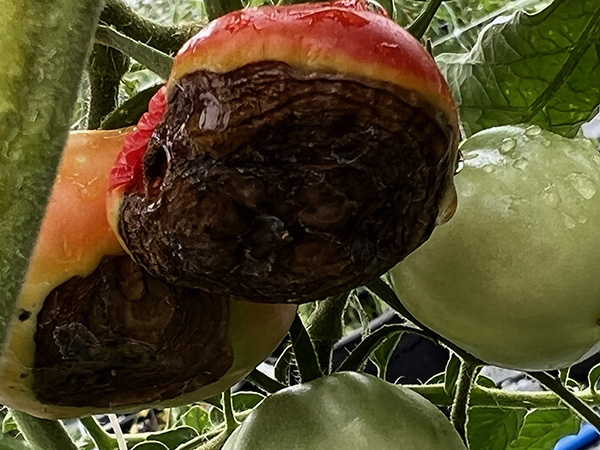
A severe case of tomato blossom end rot.
Photo credit Rachel McClure.
Blossom End Rot Your ripening fruit suddenly develops dry brown or black skin at the blossom end, even though the flesh nearest the stem seems normal. This is caused by a calcium deficiency, but it won’t help your tomatoes to add crushed egg shells or calcium supplements to your soil, which in all likelihood has plenty of calcium already. The problem is that the tomato isn’t able to access that calcium in your soil because of inconsistent moisture levels. Regular sufficient watering is the most effective method to prevent this disease. You want consistent, even moisture, not swings between too dry and too wet. Mulch can help. Check moisture levels on every walk in the garden, as diligently as you monitor temperatures, drought conditions, and wind.
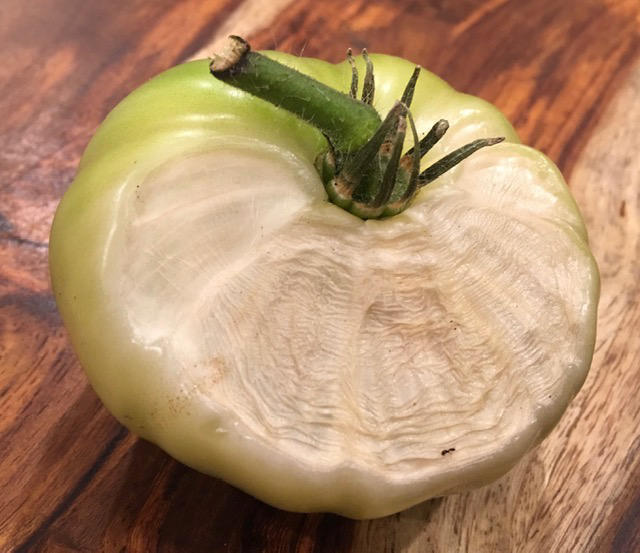
The results of sun scald.
Photo credit Gail Pothour.
Sun Scald This malady results from fruit getting too much direct sunlight during hot, dry weather. Sun-exposed areas on the fruit overheat and turn yellow or white with a leathery, sunken appearance. The scalded areas may become soft and inedible. If you prune your tomatoes, don’t overdo it. Good air circulation can help prevent fungal diseases and promote ripening, but keep enough foliage to provide some shade to the ripening fruit. Or cover your plants with shade cloth – commercial or homemade with cheesecloth or other thin fabric -- on blistering days.
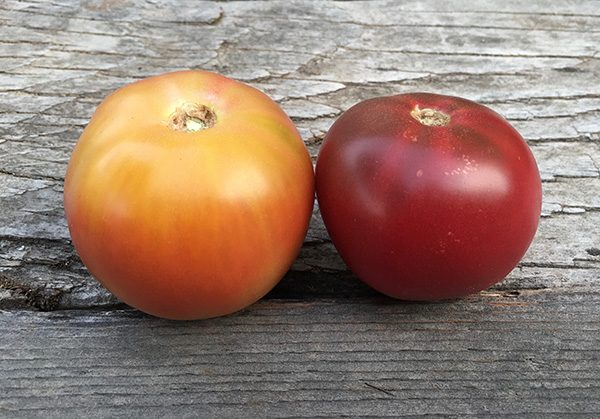
Purple Boy hybrid tomatoes. The left fruit is showing sun yellowing;
the one on the right is the normal ripe color.
Photo credit Gail Pothour.
Solar Yellowing Another problem, related to sun scald, is solar yellowing, or yellow shoulders. This occurs when fruits are beginning to ripen and temperatures rise above 86 degrees. The side of the tomato exposed to the sun stays firm and turns yellow while the protected side softens and turns to its ripe color. Again, there isn’t enough foliage to protect the fruit. The solution is shade cloth. The ripe part of the tomato, however, is still edible.
In addition to watching for insects or insect damage, inspect your tomato plants regularly for spots, leaf curl, stippling, yellowing, or wilting. Occasionally whole plants need to be removed and discarded to prevent the spread of disease.
Get identification help from the Master Gardeners’ hotline 775-784-0265, or by email at extensionwashoemg@unr.edu. The help desk, at 4955 Energy Way in Reno, is staffed in person on Tuesday, Wednesday, and Thursday, from 10 a.m. to 4 p.m.
Be prepared to describe your observations and try to take good photos of your plants. If you bring fresh plant materials into the office, put them into plastic bags, and keep different samples separated to keep them free from cross-contamination.
References:
- University of Nevada Reno Extension publication. “Tips for Managing Insect Pests in the Landscape.”
- Utah State University Extension publication. “How to Grow Tomatoes in Your Garden”
- University of Minnesota Extension publication. “Growing Tomatoes in Home Gardens”
- University of Arizona Extension publication.“Tomato Challenges”