Spotted Something Strange on Your Fruit Tree This Spring?
This spring, you might have noticed small, round bumps clinging to the twigs or branches of your plum, pear or other stone fruit trees. Are they new growths? Lady beetle larvae? Even insects at all?
If you answered, “I’m not sure, but it’s really weird,” then you’re not alone. Those tiny, immobile bumps are most likely Kuno scale, a common soft scale insect that favors fruit trees, especially plums, and occasionally shows up on roses and walnuts as well.
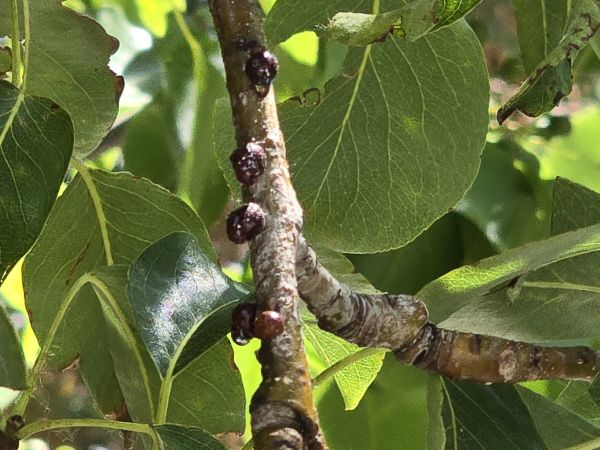
Photo: Wendy Hanson-Mazet UNR Extension
What is Kuno Scale?
Kuno scale is a soft scale insect. Unlike many insects, adult Kuno scales don’t look much like insects at all. They appear as small, rounded, shell-like bumps attached to the plant.
- The visible round bumps are the adult scales.
- Adult scales do not move.
- Female scales can lay hundreds of eggs underneath their bodies, offering the eggs protection.
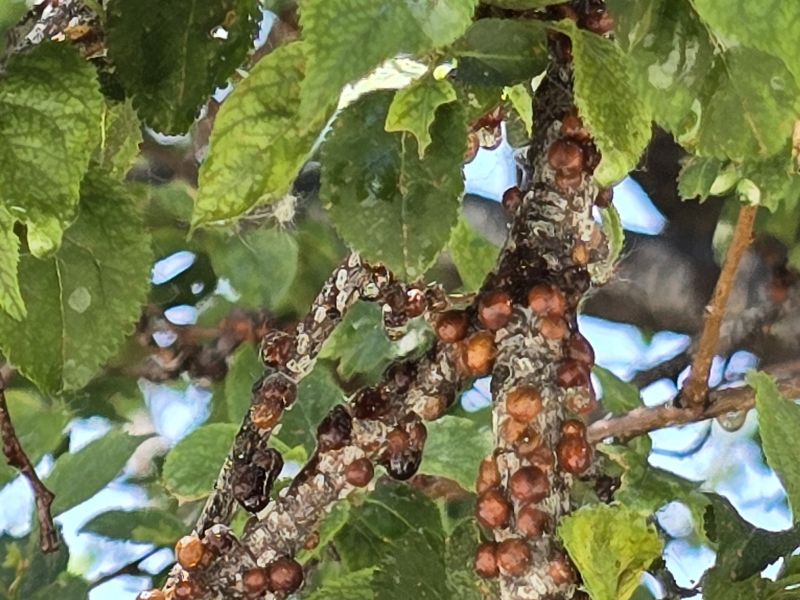
Photo: Wendy Hanson-Mazet UNR Extension
Understanding the Life Cycle
Knowing when Kuno scale is vulnerable is key to managing it effectively.
- Spring – Eggs hatch into tiny, mobile insects known as crawlers. This is the only life stage where Kuno scale moves.
- Summer – Crawlers settle on twigs and leaves and begin feeding by sucking phloem from the plant.
- Fall – The insects mature into immobile adults, ready to overwinter and repeat the cycle
Why Kuno Scale Can Be a Problem
In low numbers, Kuno scale may cause little noticeable harm. However, high populations can lead to several plant health issues:
- Symptoms that resemble water stress
- Premature leaf drop
- Twig dieback
- Production of honeydew, a sticky, sugar-rich substance
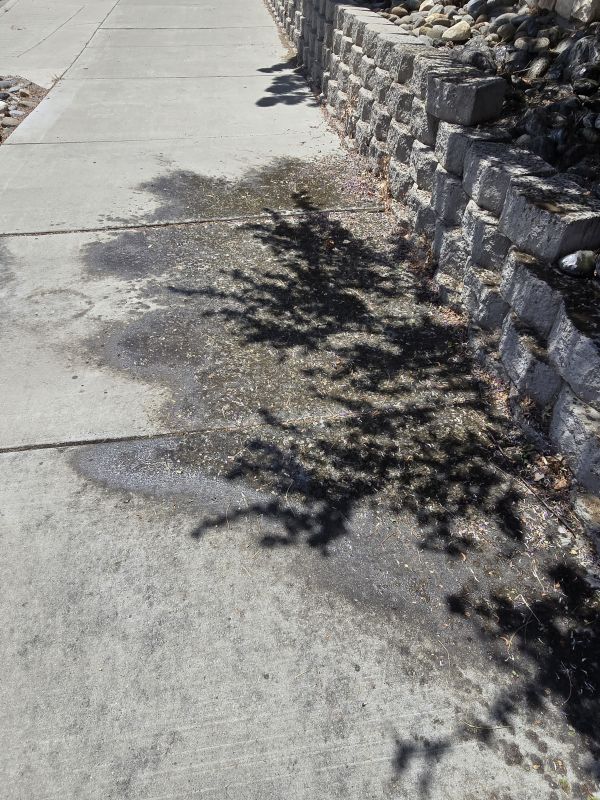
Photo: Wendy Hanson-Mazet UNR Extension
Ant Problems? Look Up!
Ants and scales may go hand in hand
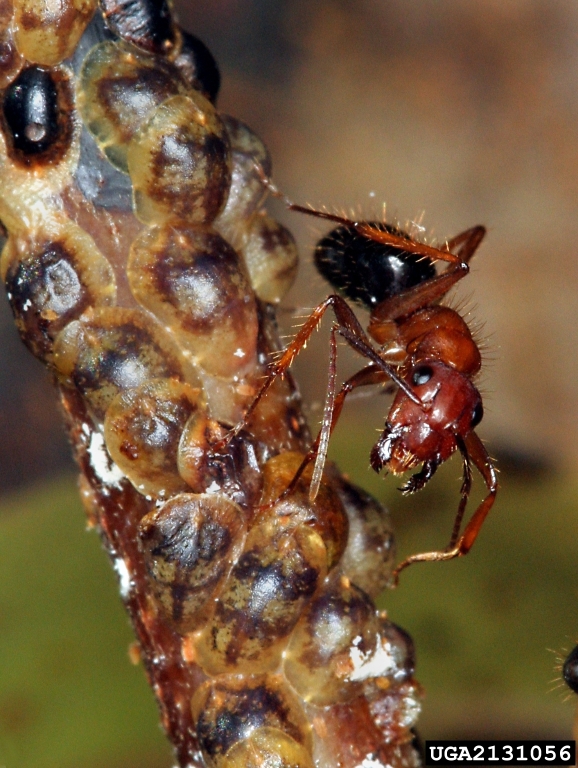
Photo: David Cappaert, Bugwood.org
Honeydew often attracts ants and encourages the growth of sooty mold, a black fungal coating on leaves and branches. Sooty mold can reduce photosynthesis, weaken the plant, and stunt growth.
If you’re battling ants, your first step should be to check for honeydew-producing pests like scales, aphids, whiteflies, or leafhoppers. Control the honeydew source, and ant and mold issues often resolve on their own.
Learn more about ANT MANAGEMENT
Management and Control Options
The most effective control strategies target Kuno scale at the right time and with good coverage of horticultural oils or insecticidal soaps.
Horticultural Oils
- Dormant oils: Apply at bud break in late winter or early spring.
- Summer oils: Target the crawler stage during warmer months.
Important tips for summer oil applications:
- Ensure the tree is well watered beforehand
- Do not apply when temperatures exceed 90°F
- Choose a cloudy day with calm winds
- Avoid applications if rain is expected
Hyperlink To More Information on Horticultural Oils
Insecticidal soaps are another effective option, particularly against crawlers.
Always read and follow the product label when applying any pesticide.
Using products correctly protects your plants, beneficial insects, and you.
If you suspect Kuno scale on your trees and aren’t sure when or how to treat, your local Extension office can help you confirm the pest and choose the most effective, least disruptive control options.