Good bugs are your pest control allies.
Of the more than one million types of insects in the world, less than 5 percent are harmful. Some insects can be nuisances but don’t cause plant damage. Beneficial (good) insects are important tools for managing insect pests in your yard. Almost every insect pest has one or more natural enemies that reduce its population when it gets out of control.
Beneficial insects are natural enemies against insect pests. They kill or reduce the numbers of bad insects in your yard. Learn to recognize them. These good guys will hang around your yard if you treat them well.
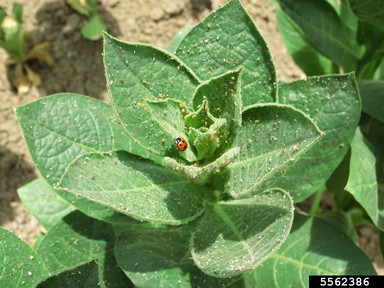
Image: Metin GULESCI, Leaf Tobacco, Bugwood.org
The balance between good and bad insects is critical to a healthy landscape. Most people are unaware of the relationship between good and bad insects in their yard until the relationship is disrupted, and insect pests begin eating their plants. A change in weather patterns, use of a pesticide or even removal of a shrub that provides cover can disrupt the balance between good and bad insects.
You can minimize this imbalance by keeping your plants vigorous and healthy throughout the year. Insect management does not mean killing every pest insect in your yard. Eliminating all pest insects reduces your population of beneficial insects. Pest insects attract the good insects that eat them. The key is to find a level you can tolerate and let nature take its course.
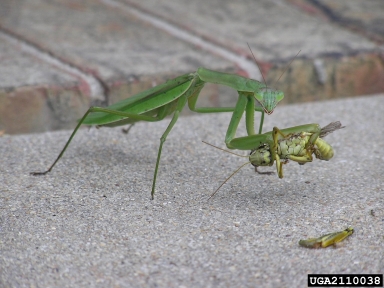
Image: Chris Horne, Bugwood.org
Beneficial insects are available commercially for release into your garden. You must follow label directions carefully for good results. Insects released in your garden may not stick around if they find food, shelter or water elsewhere.
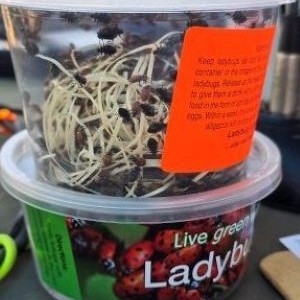
Image: Carrie Jensen, UNR Extension
Tips for boosting populations of good insects:
- Plant more flowers. Flowers attract and provide nectar and shelter for good insects.
- Provide a source of fresh water. A bird bath or shallow container of water will do the trick.
- Use lures to attract good insects. Many use chemicals that emit the scent of a specific pest insect.
- Use insecticides only as a last resort. They can kill your good insects.
- Accept a level of pest insects that will attract more good insects. The beneficial insects need something to eat.
- Know before you act. Identify the insect before you take action so you don’t do more harm than good.
These insects may look scary, but they are really your friends.
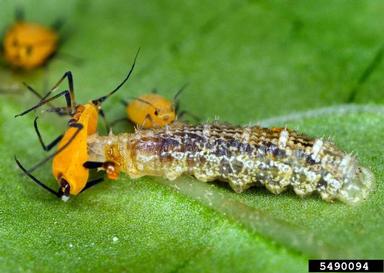
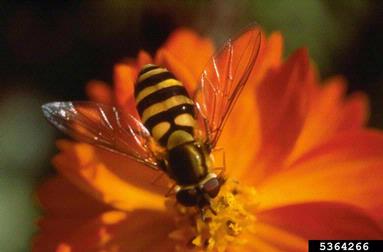
Image: David Cappaert, Bugwood.org Image: Whitney Cranshaw, Colorado State University, Bugwood.org
Don’t be fooled! This is a syrphid fly (shown right), not a wasp. It sips nectar, but the larva (shown left) eats aphids, thrips, and other sucking insects.
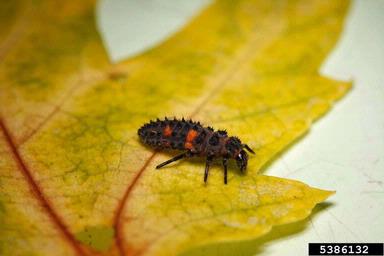
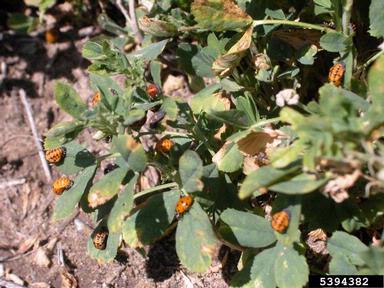
Image: Joseph Berger, Bugwood.org Image: Bruce Bosley, Colorado State University, Bugwood.org
The dragon-like larva (left photo) of the adult ladybird beetle (right
photo) is a voracious aphid-eater.
Image: David Leatherman, Colorado State Forest Service, Bugwood.org
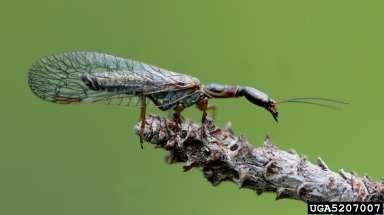
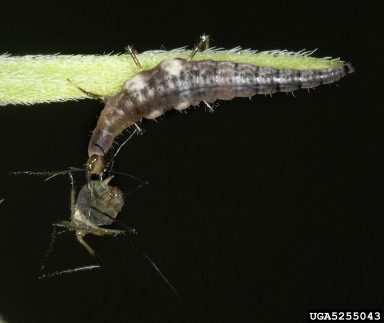
Image: David Cappaert, Bugwood.org
Both lacewings and snakeflies are voracious predators of aphids, making them excellent beneficial insects for garden pest control. Their larvae look similar, with mandibles and elongated, flattened bodies, because they are closely related predators.